
The Art of Stylization
A Retrospective on the Environment Art of Arkane’s Redfall

This week I wanted to talk a bit about a question I get quite often from beginning artists who struggle with stylization… that is… how do we stylize something real? Lets explore more and break it down to some of its basic forms through the lens of a game I had the opportunity to work on… Redfall.
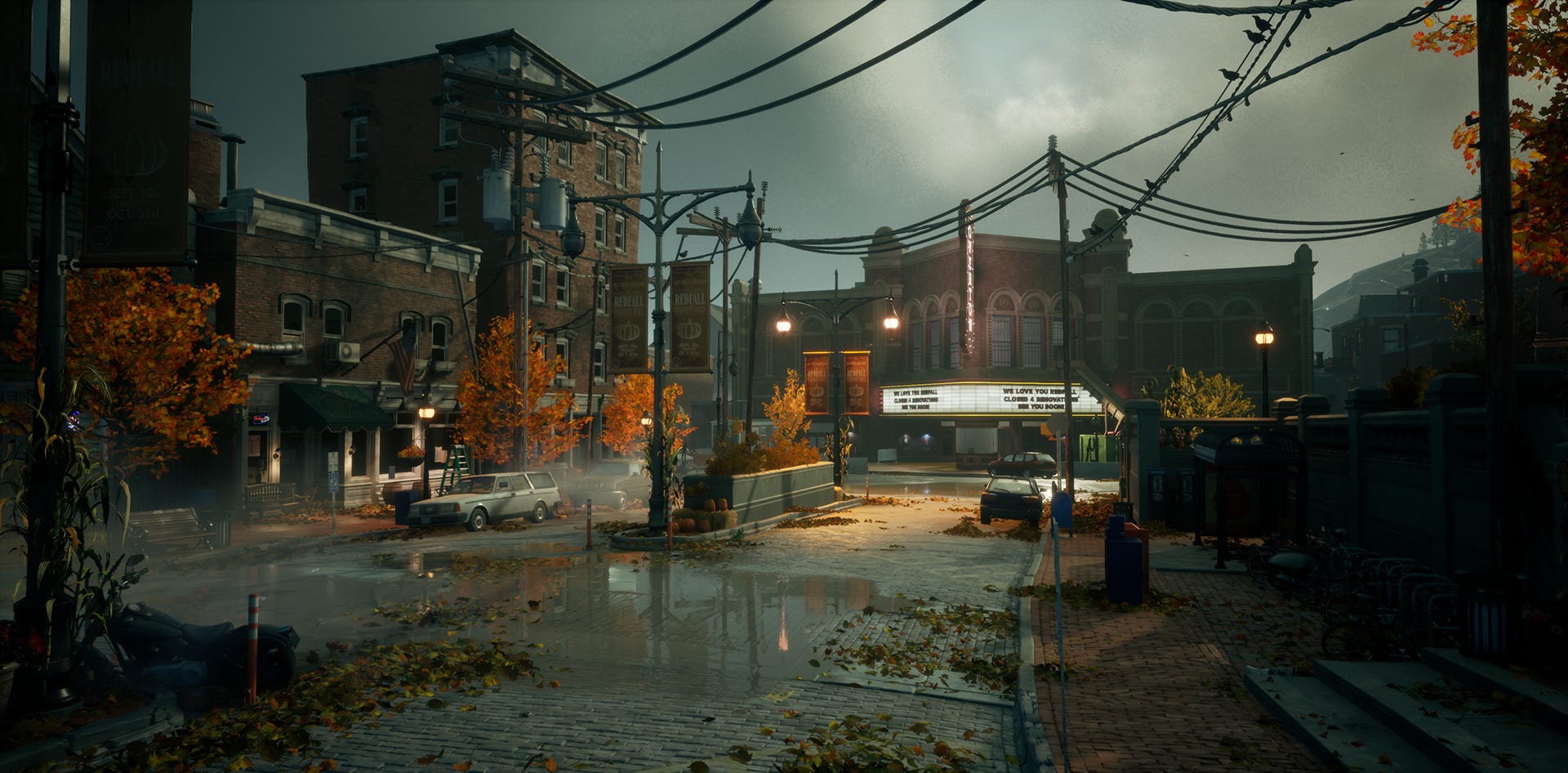
We wanted to create something that wasn’t completely realistic in terms of style, but something that wasn’t too far on the cartoony side either. It can be a challenge when you’re riding the line in between both of those extremes but Arkane has developed a craft for this. Especially seen through the art of the Dishonored series. Stylization is not exactly obvious at first since we wanted to stay familiar and real so there was a balance in how much to push the stylization.
Environment Art
As Lead Environment Artist on Redfall, I was tasked to oversee all of the environment art assets and props created by our in-house art team, and outsource partners. At the start of the project, we faced many challenges in defining the game's final artistic vision.
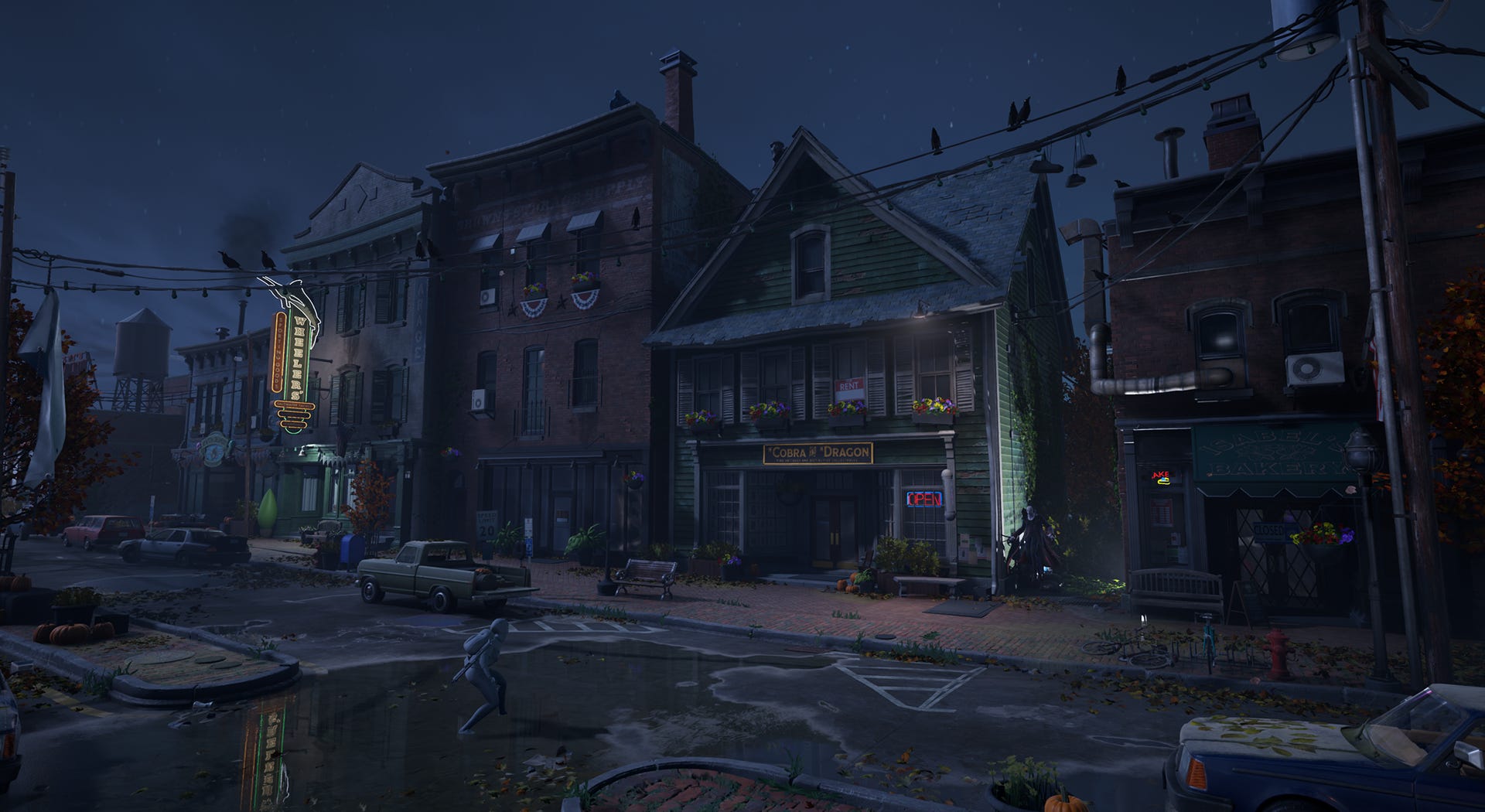
To establish a clear direction, the Environment Team created an Art Corner to help answer some of those questions. This served as a dedicated space that captured the style, mood, textures, and overall feel of Redfall’s town. We were able to solve questions about set dressing density, style, character and overall environment storytelling by creating a section of Main Street in Redfall.
Simplify then Amplify
Stylization in its most basic forms means simplifying the details and then amplifying what is kept. That is… the style comes from reducing the amount of details and exaggerating what is left. Take away the micro details and noise, while still retaining the read of the object, function, material, or whatever it is you're trying to stylize.
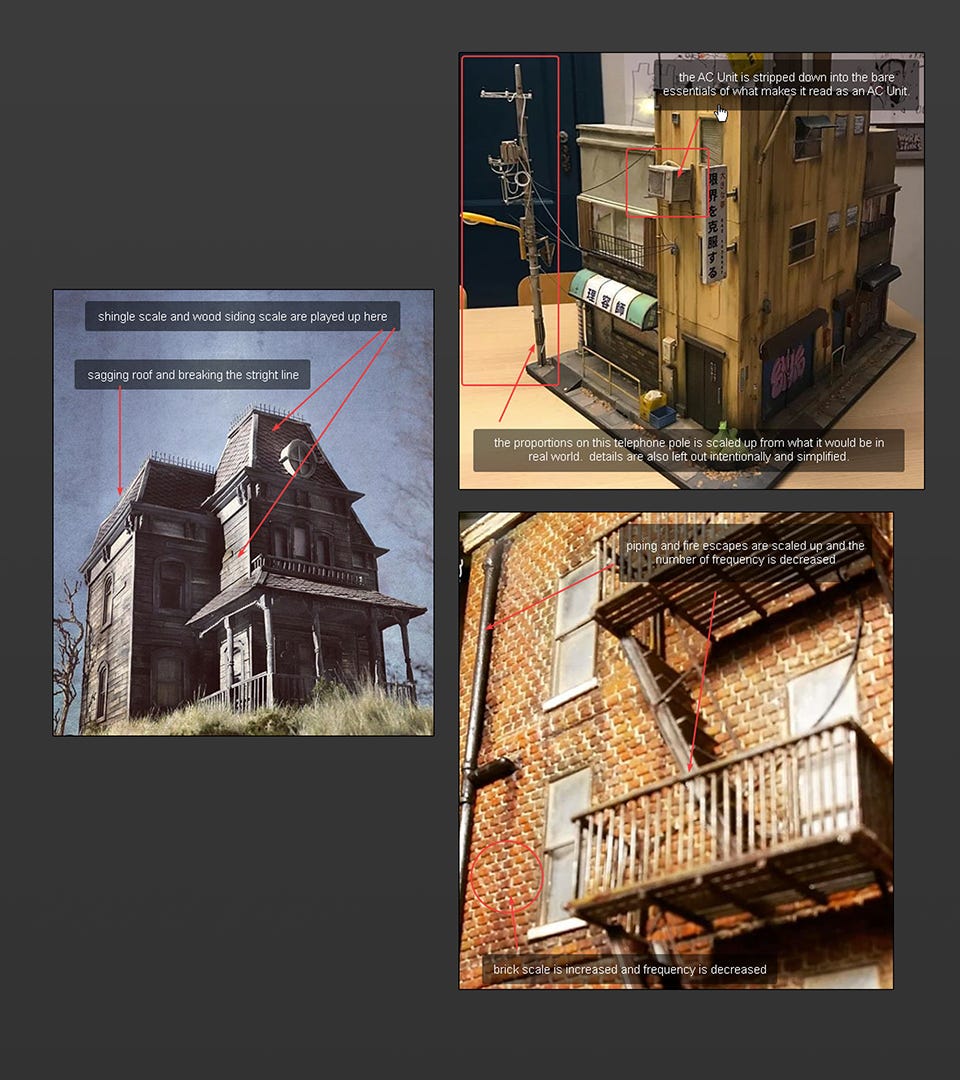
Referencing scale model sets and miniatures can be a good starting point on the type of proportional changes we were looking for. It can also give a good gauge on what details to leave out. These examples are naturally stylized because of the nature of the material they are built from. You simply can’t cram enough micro detail in there because of the scale. So naturally the models look more simplified. By scaling up and reducing the number of repeating elements (eg. storefront wood siding, fence and railing) you can start pushing the look of all the pieces in relation. Here is an example of a miniature town that does exactly this.
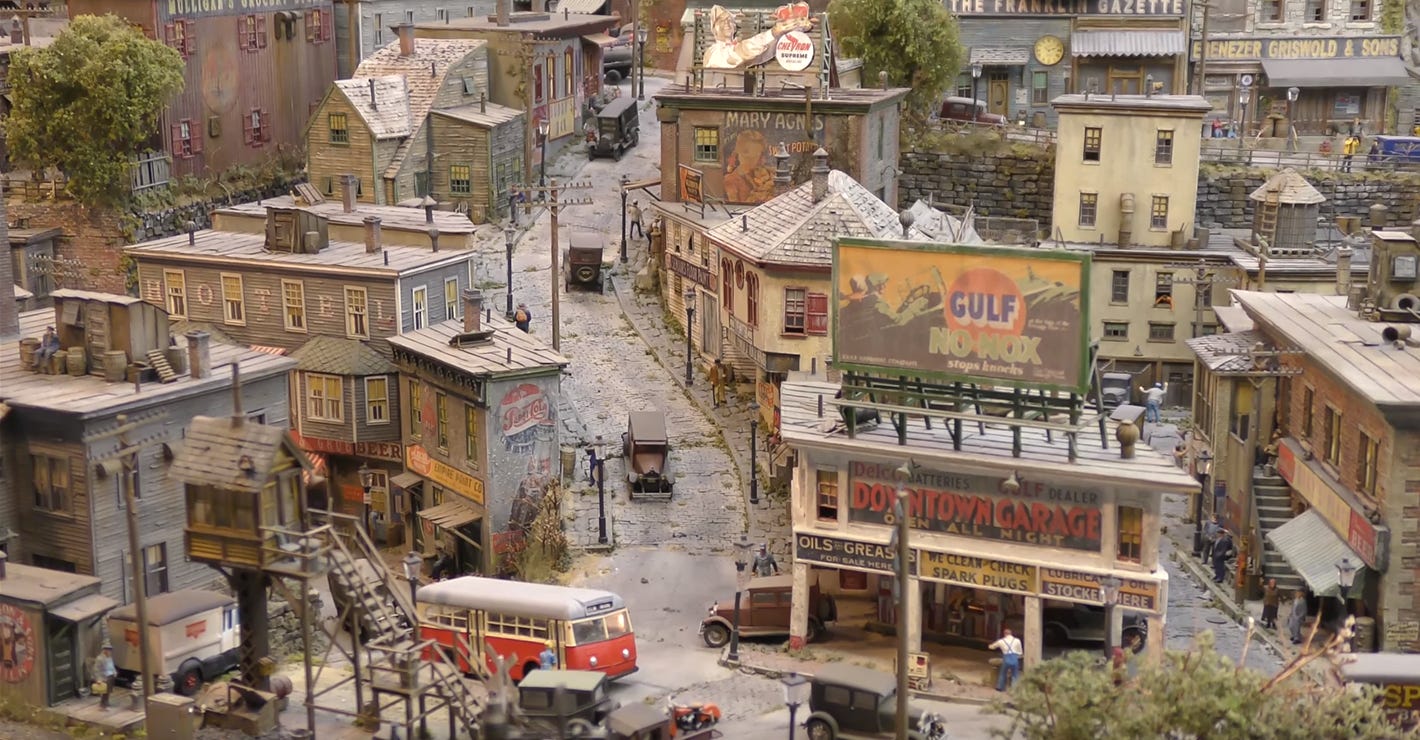
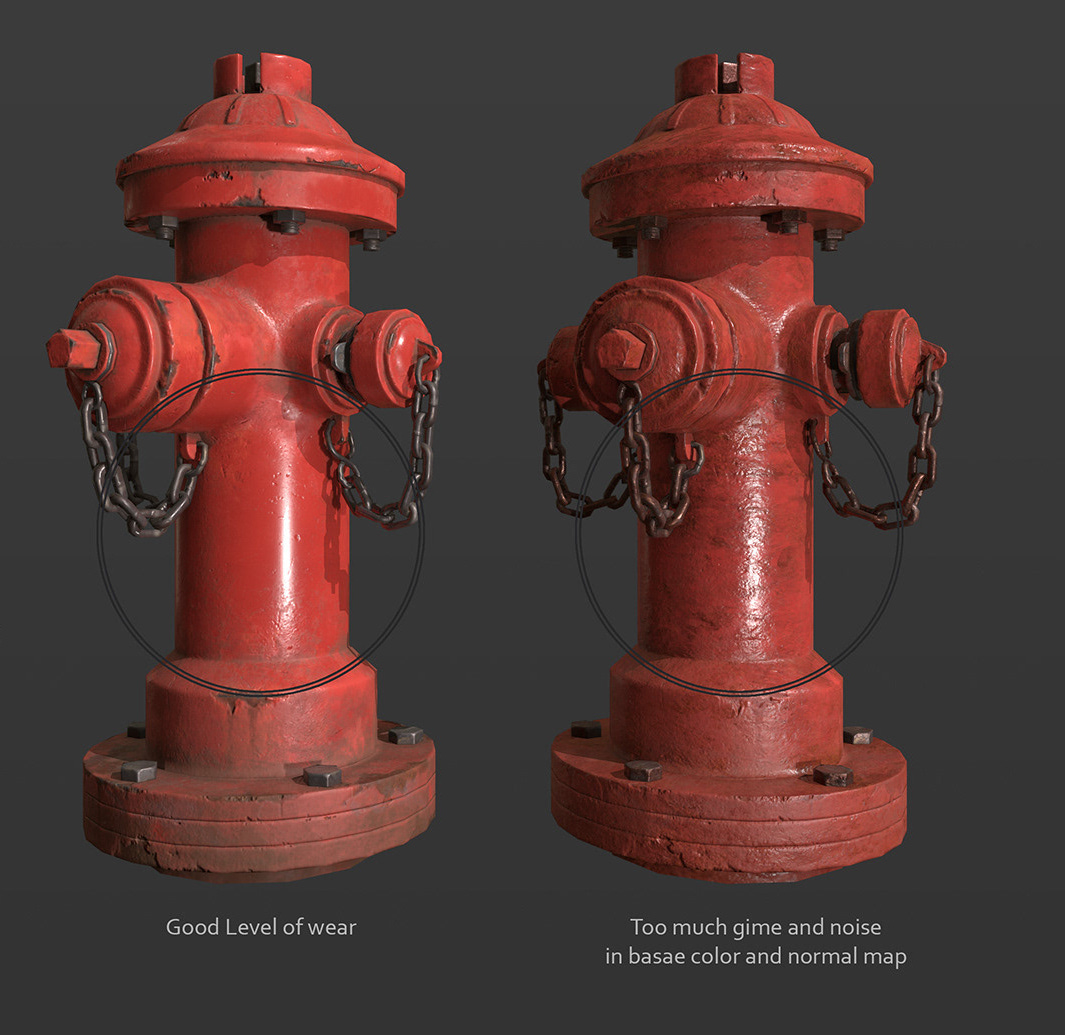
To apply this to modeling more stylized assets, there needs to be a balance of details. Simplifying the object too much will lose its function and make the object look too cartoony. Adding imperfections to the model wherever we could to help make the object look less 3D and more hand crafted. Below are some examples from the Art Guide I created to explain this concept of stylization.
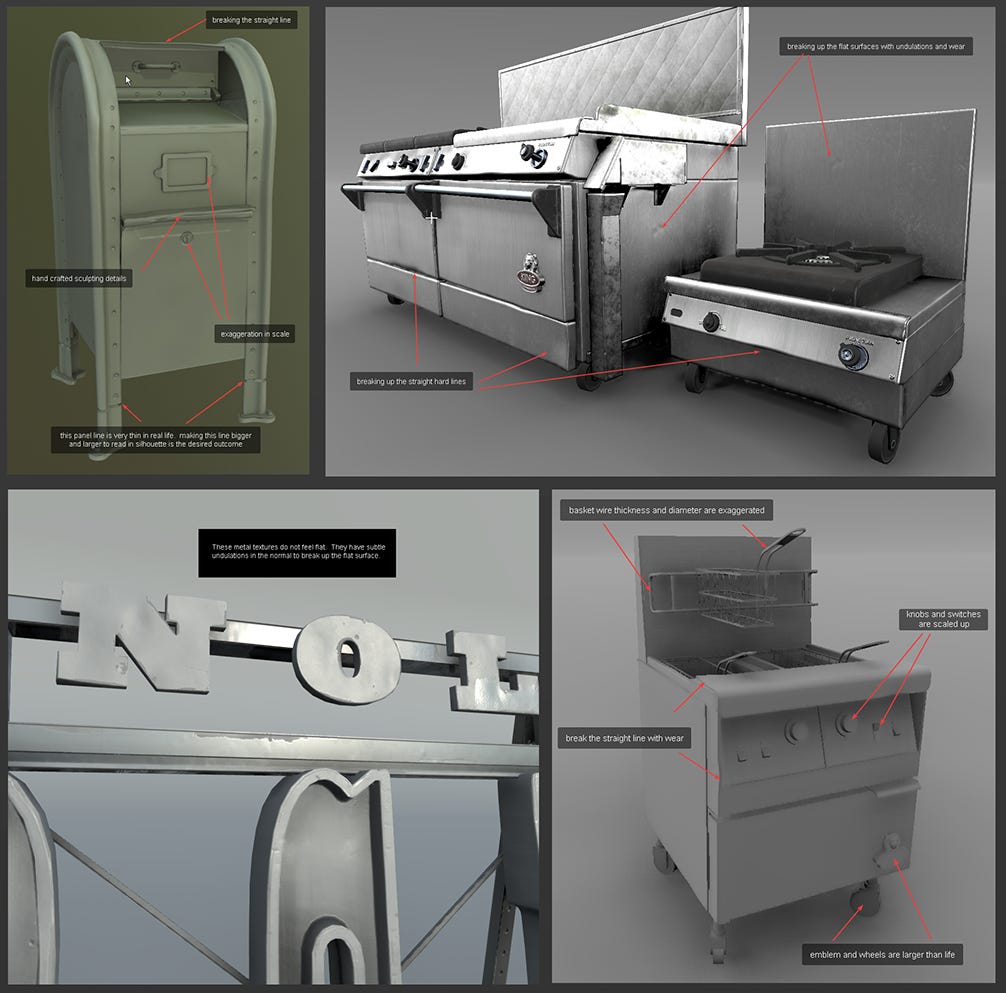
This idea of simplifying details and amplifying was continued through our texturing process.
References
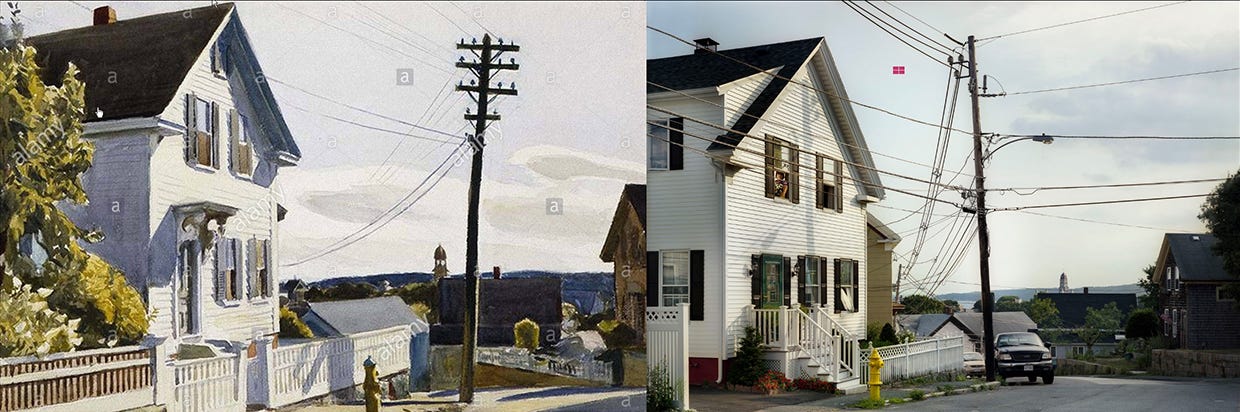
We used a lot of references to start our stylization journey on the game. A lot of it was taken from both 3D examples and 2D. Edward Hopper and Matt Cook paintings were both great examples of translating into 2D from observing the real world. We were trying to do the same in 3D by simplifying the details and exaggerating the things we wanted to keep in the model.
In this example, you can see the wood paneled slats of the house or the frequency of the picket fence were not a direct 1:1 translation. The painting on the left has that visual noise reduced making it feel a lot more stylized.
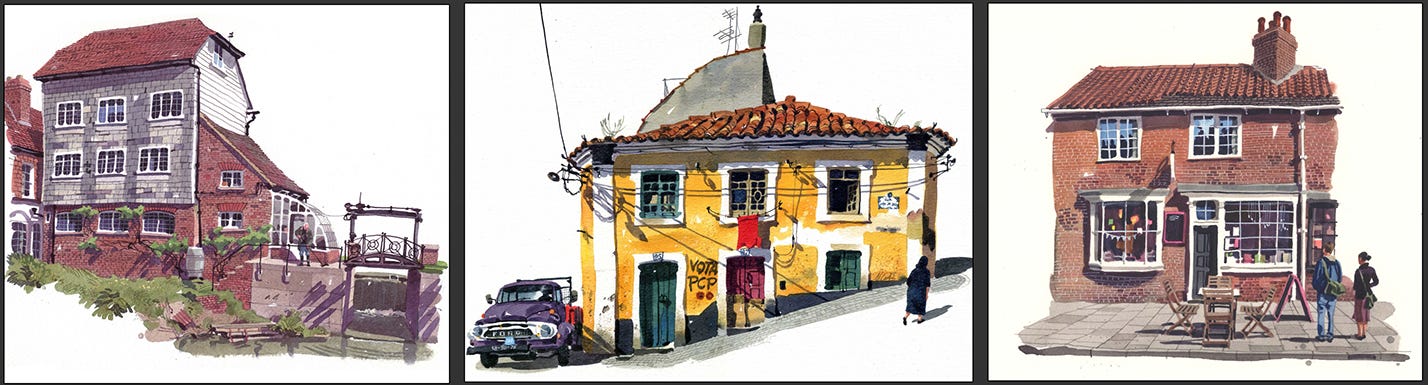
Or lets take a look at another example where the texture in the roof shingles or the pattern in the bricks are also simplified to bring in a sort of stylization to the building.
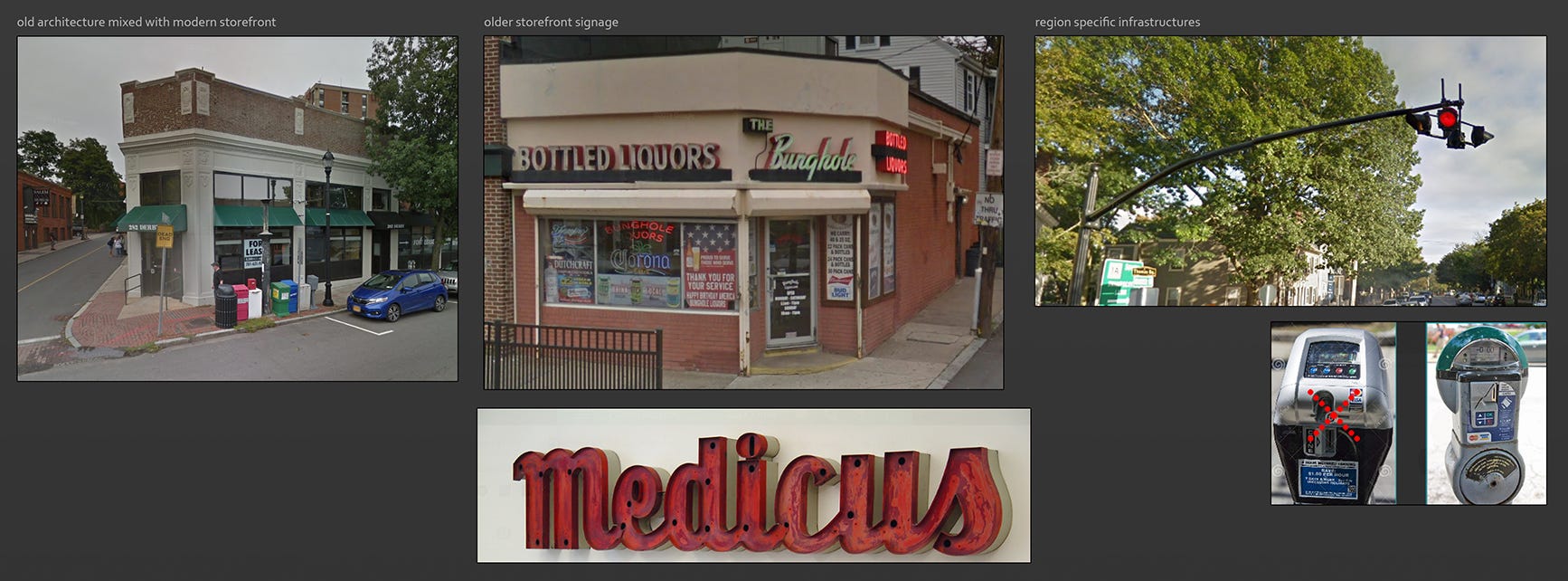
When choosing reference, we leaned more towards older, more nostalgic pieces. Because the game was set in Massachusetts, we wanted to capture that older city architecture feel and infrastructures that helped define the region. Mixed with modern vehicles and storefronts gave Redfall a more local and familiar feel in the current time setting.
Final Results
In the end, we hoped we accomplished what we set out to do. The New England area has so many opportunities for stylization and injecting character into the game. I hope this gives you some insight on the though process of all of the questions we had when stylizing a game like Redfall. I’d like to thank all of the talented Environment Artists who contributed to this project. Although the game did not live up to the hype, I’m still very much proud of both the team and the Art we created for it at Arkane. Here are some early in-game screenshots of the Art Corner we made of Main Street to test the level of detail, quality, stylization we wanted to bring into the environments and assets.

This was SO helpful; thank you for sharing; “Simplify then Amplify” is easy to understand and remember