
Characters for the Gilded Age
Trying for a beautiful design in a post-apocalyptic world

It’s been a minute since an update on the progress of our game. The past couple of week we’ve taken a pause on the world building and shifted our focus onto characters. Prior to this, we’ve just used a temporary character as a stand-in. But along with that, we’re also taking a look at shifting the art direction itself.
Artistic Direction Inspiration
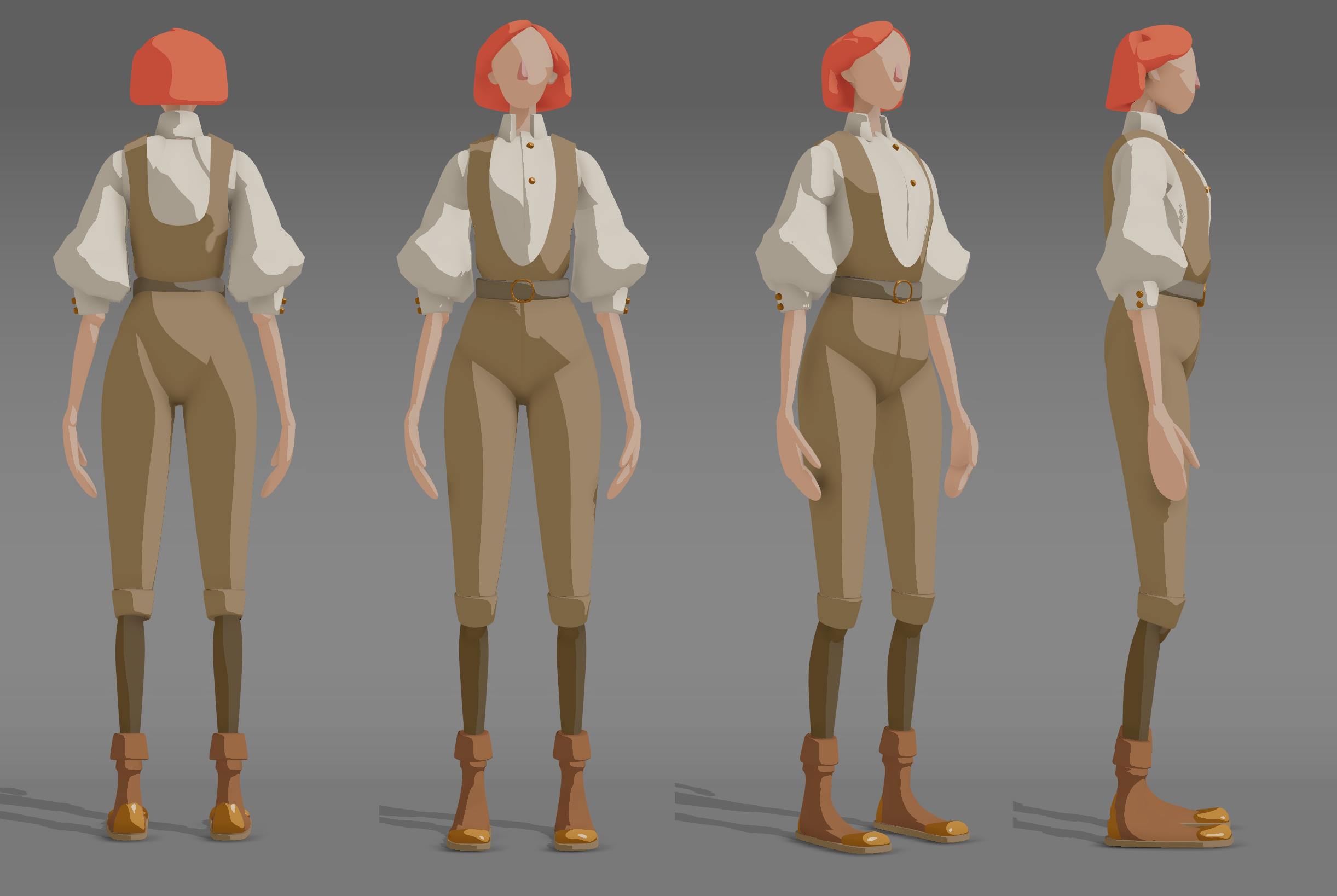
The aesthetic we’re aiming for is something in the realm of Decopunk1. We want that Art Deco and Art Nouveau time period, but minus the dark, gritty, and grimy look of other diesel and steampunk genres. We’re also looking at a mix of flat-shaded and cel-shaded styles, but with painterly gradients to give it some depth and bring in some of the beauty from the gilded age.
The idea of keeping everything flat and paper-like is still really interesting to us for certain elements like the foliage... taking those flowing Art Nouveau lines and turning them into 3D greenery that looks like it was cut from paper. Paper Nouveau… is that a thing?
Visually, I’ve been looking at a few specific games that handle a clean, flat-shaded look really well. Breath of the Wild is an obvious case study, especially for its lighting... I think that was the first time I really noticed that specific look. But more recently, I’ve been looking at games like Untitled Goose Game and Tiny Bookshop which both choose their art style for its simplicity and charm. There’s probably more examples that I’m missing here, but I think you get the idea… somewhat illustrative, but not too cartoony.
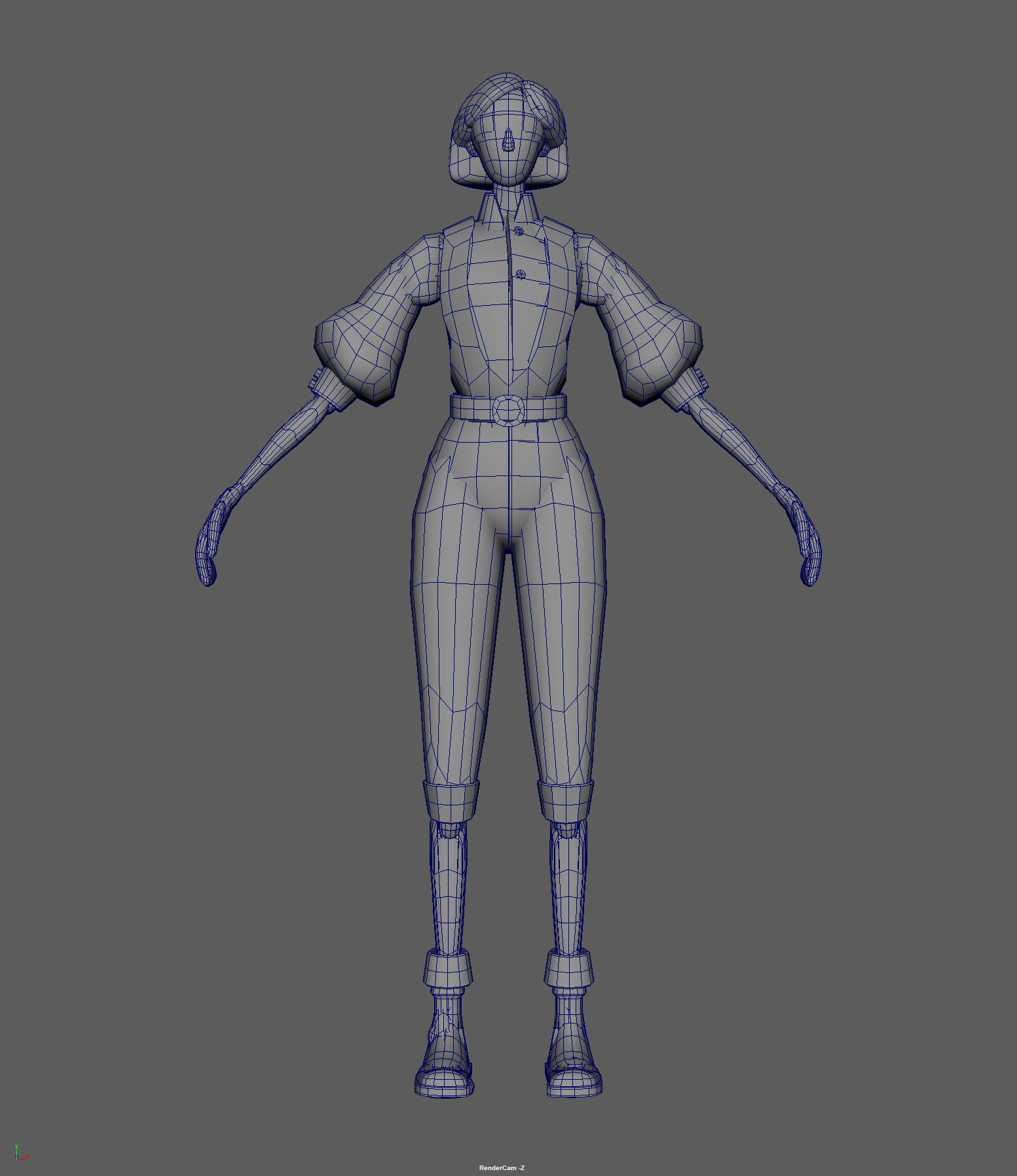
So here’s an initial pass… a rough initial pass. Brut forcing a bunch of primitives jammed into one another to get the general look and feel, while staying close to the proportion and design we want.
Technical Workflow Choices
There’s a few technical reasons for choosing this art style for its simplicity. Flat shading doesn’t require much, if any, UV work. It doesn’t require super clean geometry either. With this style, we’re hoping to eliminate skinning completely. Traditional character rigging through skinning and painting weights takes A LOT of time. Instead, we’re choosing to parent the geometry directly to the bones or locators.
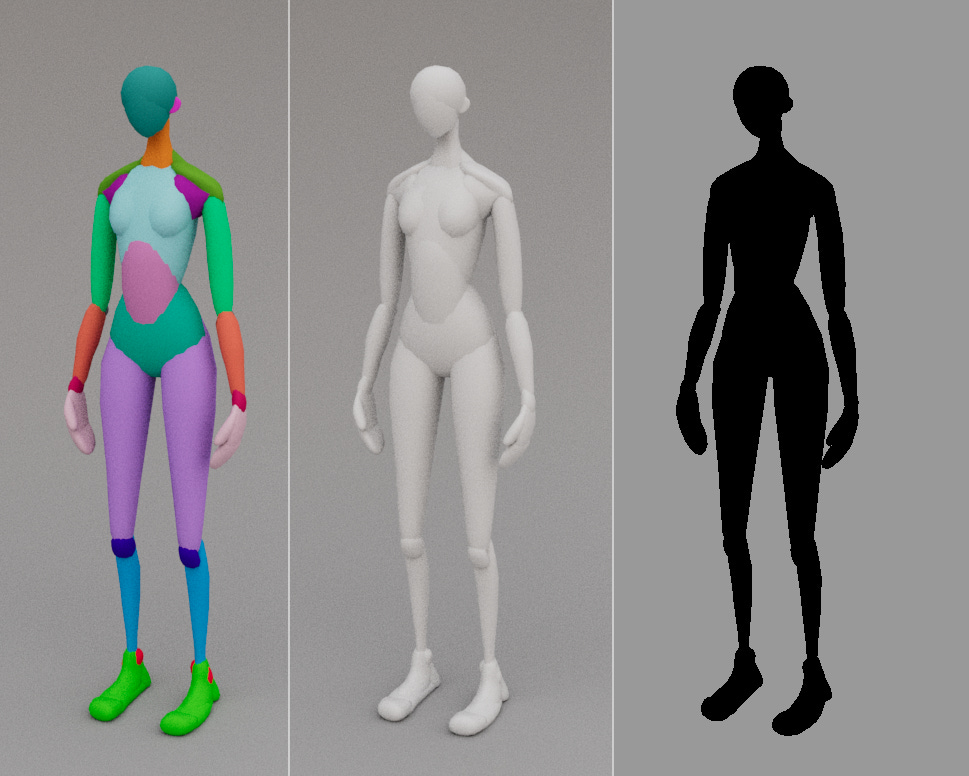
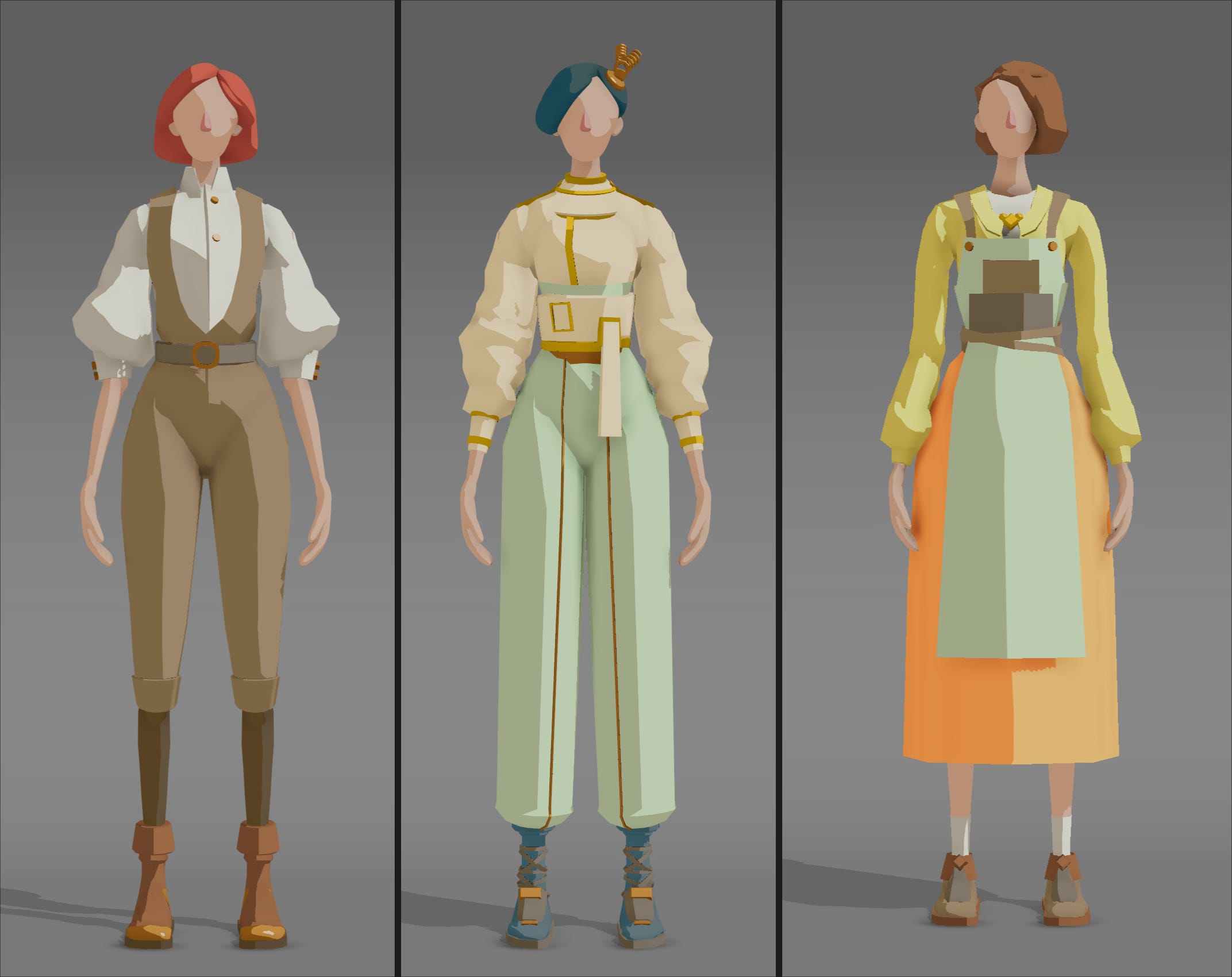
This “Rigid Binding” will allow us to swap clothing and accessories instantly. We don’t have to spend days weight painting a new jacket... we can just snap it to the skeleton and move on. We want to lean into character customization, but we need a workflow that allows for rapid iteration.
To make this work across different characters, we’re using Advanced Skeleton, which is a very robust auto-rigging tool. It’s been a minute since I’ve done rigging... or animation for that matter... so any help I can get is a win.
If we’re able to use a one size fits all system, one outfit on a model can fit both male and female characters and rigs. We wouldn’t have to model variants or custom instances for each character and able to interchange the parts. Even if they have different heights, we can use sockets to handle the placement and scale offsets accordingly.
At the end of the day, I’m still refining the look of our characters, but the logic of the technical pipeline is feeling solid. I leave you with a very very rough animation taken from some mocap and applied with an Advanced Skeleton rig onto our character! It’s very on brand! Let me know what you think of all this?!
decopunk - A subset of the dieselpunk science fiction genre and aesthetic that incorporates Art Deco elements and other aspects of the technology, culture, and fashion of the 1920s-1930s.
Wow, what a fascinating process! I don’t know anything about this kind of development so I learned a lot. The aesthetic you’ve created for the characters is lovely. Great color palettes, too!
Thank you so much!